
Green Builds
My passion for sustainable construction began in childhood, watching construction sites with my family and dreaming of buildings that not only stand strong but also protect the planet. Today, it drives everything on this page—from hands-on internships learning the realities of materials and costs, to researching green technologies, and founding projects that turn ideas into tangible impact for communities and the environment. This is my story of building a greener future for Vietnam.
Laying the Foundation – Technical & Finance Intern at Trung Hai Concrete & Construction
May – August 2023
My first real immersion into the construction world came in the summer of 2023 as a Technical & Finance Intern Assistant at Trung Hai Concrete & Construction Co., Ltd. Still in my early high school years, I stepped onto active infrastructure sites, ready to learn beyond textbooks.
I supported cost accounting for five major projects, reconciling invoices and allocating expenses for piling and foundations. But the real excitement was on-site: inspecting over 280 concrete piles across three locations, measuring verticality and alignment with precision tools. I joined six static pile load tests, watching piles endure up to 180 tons of pressure while collecting critical field data.
One pivotal moment was analyzing contractor quotations in Excel and uncovering 3-7% cost discrepancies. Those findings weren't just numbers—they highlighted how small oversights ripple into major inefficiencies, potentially wasting resources and harming sustainability.
This internship transformed my childhood curiosity into practical understanding. Amid the dust, noise, and heat, I grasped the delicate balance of quality, cost, and safety in traditional construction. It ignited my drive to evolve these practices toward greener alternatives, proving that true innovation starts with mastering the fundamentals

Pioneering Green Mobility – Independent Research on EV Charging Infrastructure
May – September 2024
Inspired by Vietnam's rapid urbanization and push for cleaner transport, I embarked on my first independent research project in 2024: exploring consumer acceptance of electric vehicle (EV) charging infrastructure.
I designed and distributed surveys to 311 respondents across diverse regions, capturing insights from urban drivers to rural communities. Analyzing the data with Partial Least Squares - Structural Equation Modeling (PLS-SEM), I integrated the Theory of Planned Behavior with green technology factors.
Key discoveries emerged: perceived convenience, environmental benefits, and technological trust strongly influence usage intention, with "green attitude" acting as a powerful mediator. The results highlighted barriers like infrastructure gaps but also opportunities—strong policy support could accelerate adoption.
This project was more than academics; it was a call to action. By offering evidence-based recommendations to policymakers, I contributed to sustainable transportation discourse. It marked my shift from observing construction to influencing broader green systems, proving one determined student's research can illuminate paths toward a low-carbon future.


Building Hope – Founder & President of Construct of Kindness
November 2023 – Ongoing
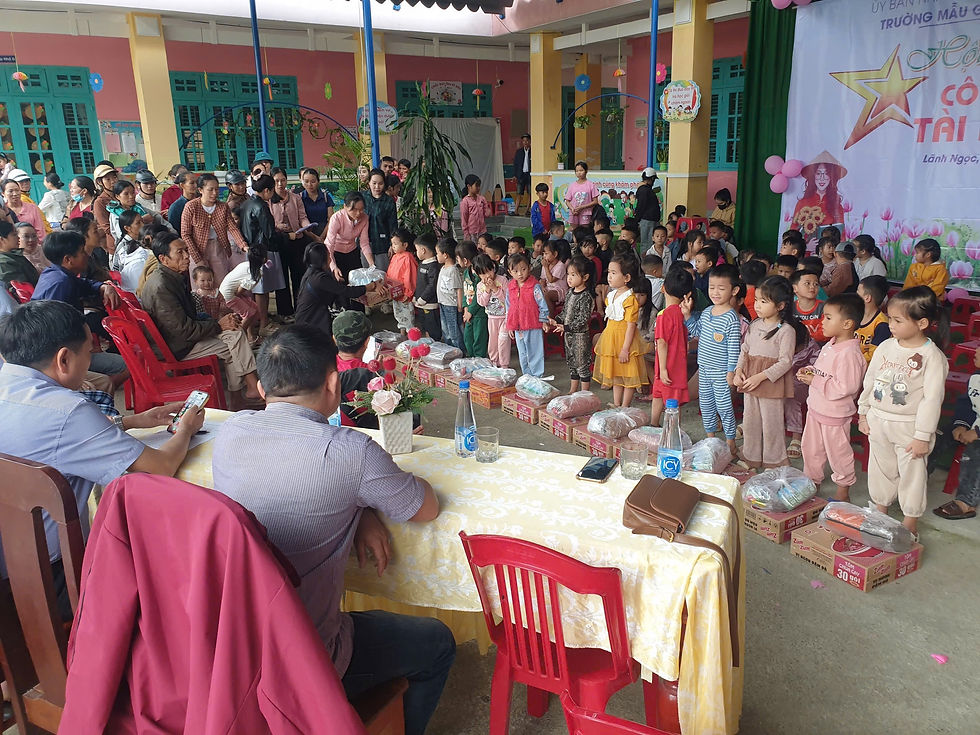
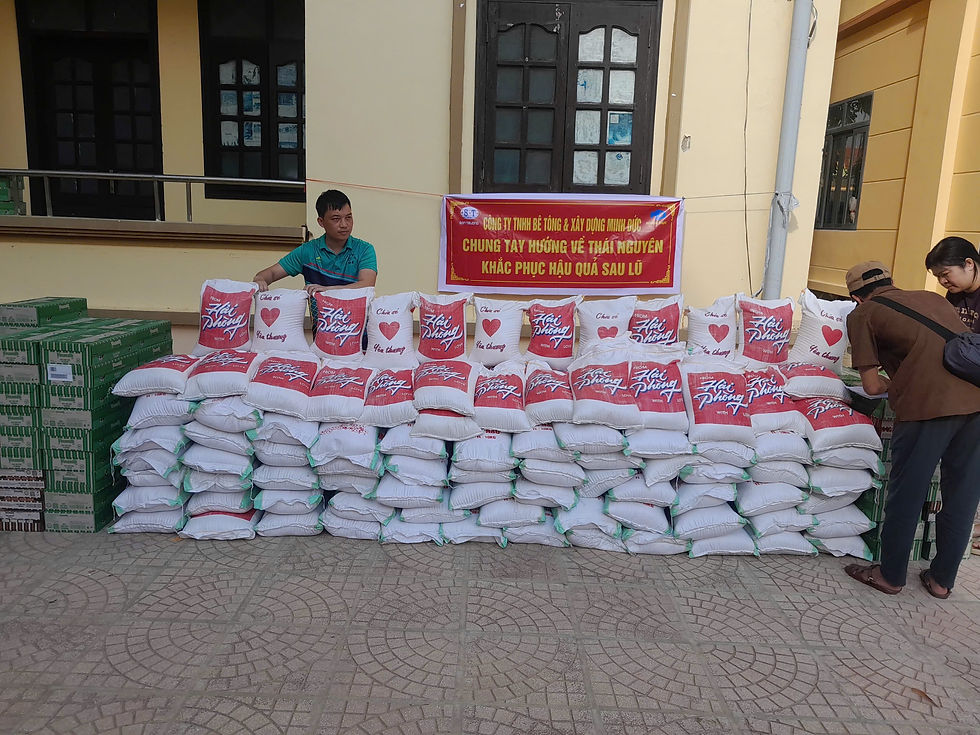
In late 2023, I founded Construct of Kindness, a social impact initiative mobilizing corporations for hands-on CSR: building homes for families in hardship.
Starting with 35 core members, I developed the "One Company – One Home" model. We pitched to major enterprises, raising $45,700 USD from eight sponsors. Those funds built 11 charity houses (valued at $29,300 total) in provinces like Ha Nam, Thai Nguyen, and Hoa Binh, plus $12,800 in scholarships for medical students.
Leading four volunteer trips to remote communes, I oversaw construction, livelihood support, and emotional handovers—watching families receive keys to safe homes was profoundly moving. One trip to Chieng Chau stands out: amid rain and mud, we completed a house for a policy-beneficiary family, turning despair into joy.
This project showed construction's deepest purpose: not just structures, but dignity and community resilience. By blending business acumen with compassion, we've proven scalable CSR can address inequality while promoting sustainable practices. It's my most heartfelt chapter yet





Decoding Green Steel – Co-Authored Peer-Reviewed Research
April – October 2025
In 2025, I co-authored a peer-reviewed paper (published December 2025 in JEFMS) investigating green steel price fluctuations' impact on sustainable building investments in Vietnam's real estate sector.
Under instructor guidance, we surveyed 237 stakeholders—from developers to suppliers. Applying Structural Equation Modeling based on Theory of Planned Behavior and expectancy-value theory, we tested mediation effects.
Findings were eye-opening: price volatility reduces perceived feasibility by 32% and investment willingness by 24%. In a country projected to triple steel output by 2060, this uncertainty hinders decarbonization.
We recommended supply chain stabilization and government subsidies to boost adoption, aligning with net-zero goals. Contributing to academic literature on emerging markets felt validating—this research bridges theory and policy, highlighting cost barriers in green transitions. It fueled my belief that data-driven insights are vital for overcoming hurdles in sustainable materials

That same year, as Chief Financial Officer for BioPulse Pavement, I helped develop a revolutionary green tech concept: smart pavement with self-healing capabilities, pressure-based energy generation, urban heat reduction, IoT integration, and bioluminescent lighting—operating via B2G-B2B-PPP models.
I crafted a comprehensive 5-year financial model: initial CAPEX $800,000 USD, Year 1 OPEX ~$127,000, four revenue streams. Projections showed NPV $2.44 million USD, positive free cash flow from Year 2 (~$108,000 annually), break-even in 18 months, and Year 3 revenue $1.24 million with $560,000 net profit.
We pitched in five competitions, securing Top 15 in the Global High School Business Competition. Modeling futuristic yet feasible tech brought my childhood site visits full circle—imagining roads that heal themselves and power cities.
This project embodies bold innovation: turning urban infrastructure into sustainable assets. It reinforced financial modeling's power in validating green ideas, pushing me toward scalable solutions for smarter, cooler cities.
Innovating Urban Futures – CFO of BioPulse Pavement Green Tech Startup
April – October 2025
.jpg)
.png)
“We are all here on earth to help others; what on earth the others are here for, I don't know.”
– W.H. Auden (adapted for impact)
No, better: “The best way to find yourself is to lose yourself in the service of others.”
– Mahatma Gandhi
The Birth of FinLearn App – Turning Finance into an Epic Quest
November 2023 – August 2024
I personally designed the Minimum Viable Product (MVP) on Figma: 25 gamified learning modules with a reward system that converts points into real-world perks (like Shopee or Starbucks vouchers). The business model is freemium—core content free, premium at $2/month unlocking advanced features and bank partnerships. Go-to-market strategy: Free for individuals, plus B2B packages sold to schools and educational banks (targeting 50 partners by Year 2).
Building the 5-year financial model was the biggest challenge but also the most rewarding. Projections showed Year 3 revenue reaching $190,000 USD from premiums and partnerships. I pitched successfully in preliminary rounds of two national high school startup competitions and am currently preparing for a $150,000 USD pre-seed fundraising round.
FinLearn App is more than an app—it's a mission to empower an entire generation. Rooted in my own early curiosity about money flows from family construction projects, it's now helping hundreds of teens turn finance from a burden into an exciting adventure. Seeing users light up as they "level up" their real-life money skills reminds me why this matters: Early financial confidence builds stronger futures
Everything started with a simple realization in late 2023: In Vietnam's booming economy, most high school students—including me and my peers—knew almost nothing about personal finance. Quick chats with friends revealed the gap: What are mutual funds? How does investing work? How do you budget effectively? These concepts felt distant, dry, and intimidating. I asked myself: How can we change that? How can we equip Vietnam's youth with financial knowledge early, so they're confident and prepared?
The answer hit me instantly: Make it a game! FinLearn App was born as a gamified mobile app tailored for high schoolers, where learning finance feels like embarking on an epic quest. Users progress through challenges on budgeting, saving, basic investing, and advanced topics like mutual funds and portfolio diversification—earning badges, leveling up, and competing in simulated markets.
To validate the idea, I surveyed 650 students in Hanoi and Ho Chi Minh City. The results were eye-opening and motivating: 68% were unfamiliar with mutual funds, but 81% expressed strong interest in learning through a "play-to-invest" game format. This confirmed a real need: Teens want to master finance, but it has to be fun and interactive, not lecture-based.


.png)

EcoFinance – Where Financial Games Meet Real-World Sustainable Impact
August 2024 – Present
If FinLearn App is the digital "finance game," then EcoFinance is its real-world counterpart—merging financial literacy with ultra-low-cost green housing for children and farming communities in rural and highland areas. This project grew from a desire to scale impact beyond screens: Not just teaching theory, but applying it directly to those who need it most.
I founded the club in August 2024 with 28 core members. The core idea: Use affordable green materials like hempcrete and recycled bamboo/wood (under $190 USD per house), integrated with the FinLearn App gamification app for hands-on learning.
We partnered with People's Committees in two communes to plan a $38,000 USD green village project for 50 households, achieving 28% savings in public construction costs through recycled materials. Fundraising was hands-on—I pitched to three local enterprises (Long An Power Company, Tan Phu Bamboo Cooperative, and Green Building Materials Supermarket), securing $1,700 USD for solar panels and brick-making equipment.
The two field trips to Cao Bang and Hang Kia were unforgettable milestones. We delivered workshops to over 100 students on electricity conservation and sustainable materials. On-site market surveys showed 90% interest in game-based finance learning; after piloting the "Stock Quest Eco" multiplayer trading game from the FinLearn App demo, post-session surveys revealed 95% engagement and enjoyment.
EcoFinance perfectly intersects my passions for finance and green innovation. It doesn't just build houses—it builds hope, skills, and resilient futures. Watching highland kids laugh and compete in finance games, or families move into new eco-homes with solar power, is profoundly rewarding. The project proves finance isn't abstract: It's a powerful tool to reduce inequality, empower communities, and protect the environment—one gamified lesson and one green home at a time


